Blogs
Videos
Case Studies
Inside Dysruptx: Building a Biotech Business Model That Works
Dysruptx is a University of Glasgow biotech venture preparing to spin out and raise investment around a new class of therapies designed to treat disease while reducing side effects. As the company moved closer to commercialisation, the team needed to better understand how to translate its scientific platform into a scalable business model that investors, partners and customers could clearly engage with.
To support that transition, the team took part in the Grand Scale Kickstart Innovation Cluster Pilot, delivered in partnership with the British Business Bank, working to better understand how to translate their research into a scalable commercial venture.
Through the programme, the team worked on refining its commercial model, validating market positioning, strengthening investor communications and understanding how partnership revenue could support long-term growth.
We spoke with co-founder and CEO Dr Connor Blair about what it took to make that shift, and how his perspective as a scientific founder has evolved in the process.
Translating Science Into a Commercial Venture
Stepping into the role of CEO meant navigating a very different landscape from the research environment Connor was used to.
With a background in science, the focus had always been on developing and refining the underlying research But building a company around that innovation introduced a new set of commercial questions — particularly around how the venture would operate, scale and create long-term value.
I'm a scientist, that's my initial training. So coming into the commercial world and starting up a company and being the CEO of it was a very new experience for me.
While the scientific pathway was well understood, translating that into a scalable commercial venture was less clear.
“The primary question that I had going into the programme was really around how to action upon our business model… making sense of it from a commercial perspective, not from a scientist’s understanding, was really important for me.”
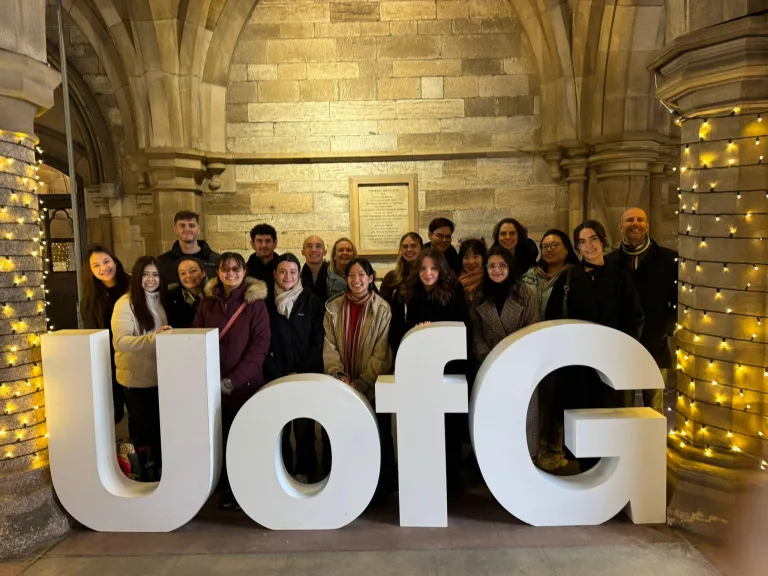
Building a Sustainable Partnership Strategy
A big part of that challenge lay in how the business model came together in practice.
Dysruptx operates across two connected areas: developing its own pipeline of therapies, while also using its discovery platform to engage with pharma and biotech partners. Both elements were clear individually, but how they worked together as a commercial model was less well defined.
“We’re a company that develops our own pipeline of therapies, but we also have a discovery platform that lets us engage with pharma and biotech and bring in partnerships — so that’s sort of two branches to our business model.”
While the science and platform were well understood, the role that partnerships could play within the business needed more clarity.
We didn’t have a great grasp around how we could utilise that partnership model… we wanted to understand how we could leverage that piece of the business to complement the drug discovery, de-risk it through non-dilutive revenue, and strengthen the overall model.
Through the Kickstart programme, the team developed a clearer understanding of how to position and communicate the value of its partnership offering, ultimately clarifying how both sides of the company could work together to support long-term growth.

Ready to Spin Out and Raise
The Kickstart programme helped accelerate the team’s investment readiness, sharpening both their commercial strategy and how they communicate the opportunity to investors. As a result, Dysruptx is now in a far stronger position to spin out, raise funding and scale the business.
We’re very much ready now to spin out and to receive that investment. We’re deep into our fundraising campaign… when you go back three or four months, maybe we weren’t.
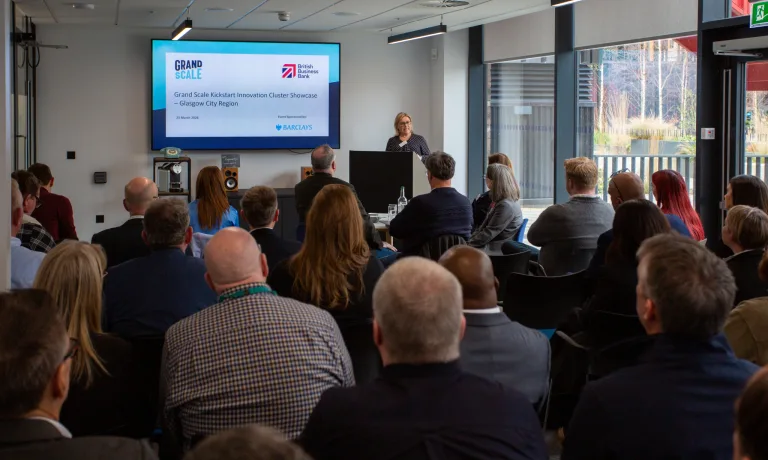
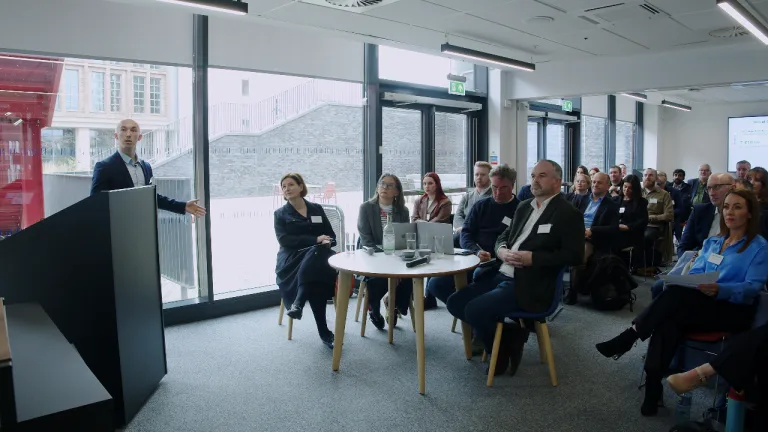
This progress was on display at the Innovation Showcase in Glasgow, the closing event of the programme, where teams presented to a room of fellow founders, investors, universities and partners from across the public and economic development landscape. For Connor, the showcase stood out as a clear highlight.
“Definitely the pitch event… it all comes together at that point. You get an opportunity to talk about the science and about your business and what excites you… and get really great feedback.”
The session provided an opportunity to interact with the wider community and test the story, while opening the door to more direct engagement with investors. Conversations that began in the room have since progressed into follow-on discussions and formal pitching opportunities, demonstrating how greater clarity around the model is already translating into meaningful investor engagement.
The showcase highlighted the importance of ecosystem collaboration in helping science-led ventures move from research towards commercial growth and investment readiness.
A Shift in Perspective
At the heart of Dysruptx’s progress is a change in mindset, moving from developing in isolation to thinking more deliberately about how their work connects to the market.
As scientists you quite easily fall into the trap of just staying in a lab and developing and iterating and improving and getting to this polished product that might not actually have a market that it needs.
But engaging with customers, engaging with other individuals in that space, helps you understand that market and build your prototype more effectively, so that when you engage with them you know that there is a market for what you're developing.
That shift, from focusing solely on the science to grounding product development in real demand, now shapes how the team approaches building the business and engaging with customers, partners and investors as they move forward.
Dysruptx’s journey reflects something we see often with science-led ventures. The challenge isn’t usually the strength of the research, it’s translating that innovation into a venture that customers, partners and investors can clearly understand, engage with and support.
Discover how we support early-stage innovation ventures
Recent Insights
Supercharge your inbox
Subscribe to our emails for the latest insights and updates