Blogs
Videos
Case Studies
From Quantum Research to Commercial Scale: Kelvin Quantum’s Growth Journey
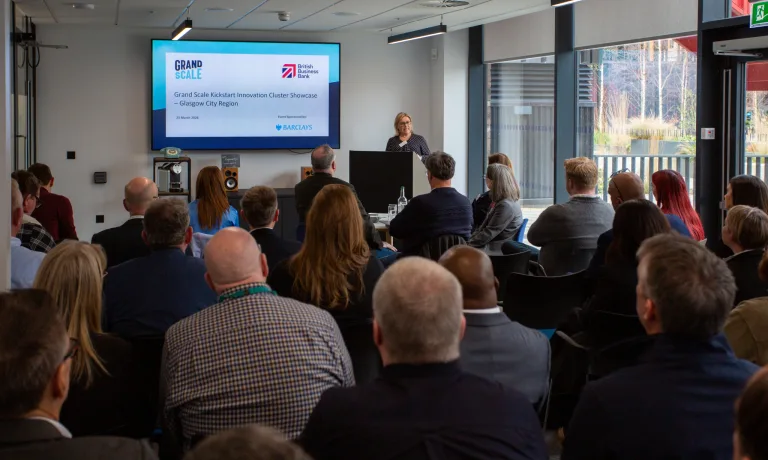
We recently caught up with Robert Graham, CEO of Kelvin Quantum, following the team’s participation in the Grand Scale Kickstart Cluster Innovation Pilot — a 10-week commercialisation and investment programme delivered in partnership with the British Business Bank.
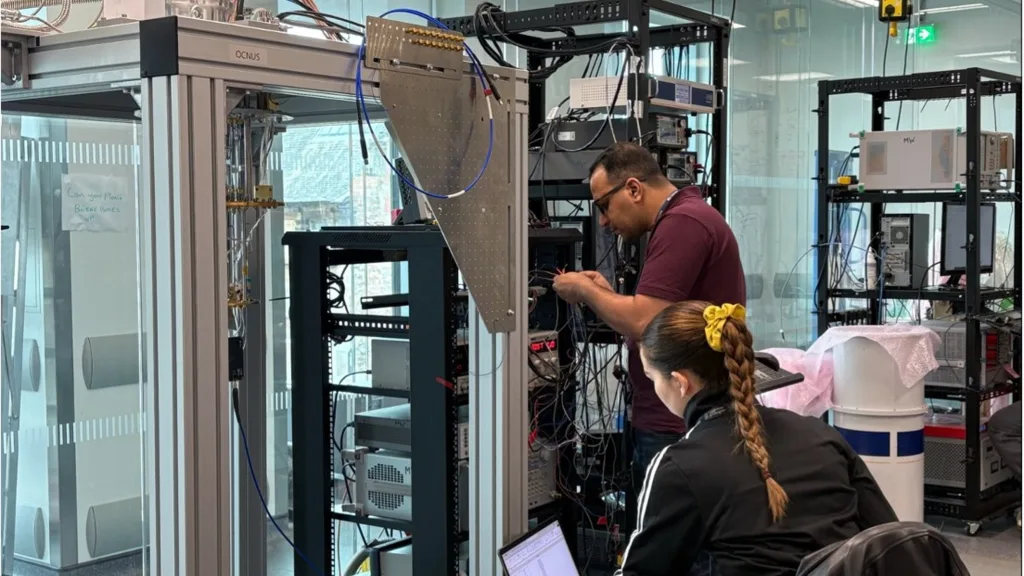
Originally spun out of the University of Glasgow’s Quantum Lab, Kelvin Quantum develops semiconductor electronics designed to help scale quantum technologies beyond research environments and into commercial applications. In practice, this means building the infrastructure needed to support the commercial deployment of quantum systems across real-world use cases.
Having completed the programme and presented at the closing Innovation Showcase in Glasgow, Robert reflected on how the team’s approach to building and scaling the business had evolved.
Building Without a Commercial Playbook
At an early stage, the challenge was not the technology itself, but how it was brought to market. While the team had a strong understanding of what they were building, ensuring it was visible and commercially understood remained a challenge.
As Robert explains, much of the early effort was simply about making the company known:
The biggest part of achieving sales traction was almost educating people on who we were and that we did exist.
Alongside this, there was no clearly defined route for how opportunities moved from initial engagement through to conversion. Customer interactions were largely informal, without a consistent commercial process in place.
There was, as Robert noted, an assumption early on that “it’ll work itself out,” rather than something that needed to be deliberately built.
Establishing a Repeatable Sales Engine
Through the programme, the focus shifted towards building a more scalable and repeatable commercial approach. This involved rethinking how the company engaged with customers, while making more deliberate use of tools such as CRM systems, website content, LinkedIn and outbound channels.
For Robert, a key learning was understanding how to use these tools effectively, including how emerging AI capabilities could support much of the underlying work.
One of the most significant outcomes was the development of a clearly defined commercial pipeline. What had previously been managed on an ad hoc basis was now supported by a more consistent and measurable commercial process, giving the team greater clarity on how opportunities progress and where to focus effort, while remaining flexible enough to adapt as the business evolves.
Robert captured this clearly:
We now have a sales pipeline. We have a very clear route from a customer getting in touch right through to bringing revenue back into the business.
Sharpening Value and Market Positioning
This greater commercial clarity also strengthened how the team articulated its value proposition and engaged with prospective customers.
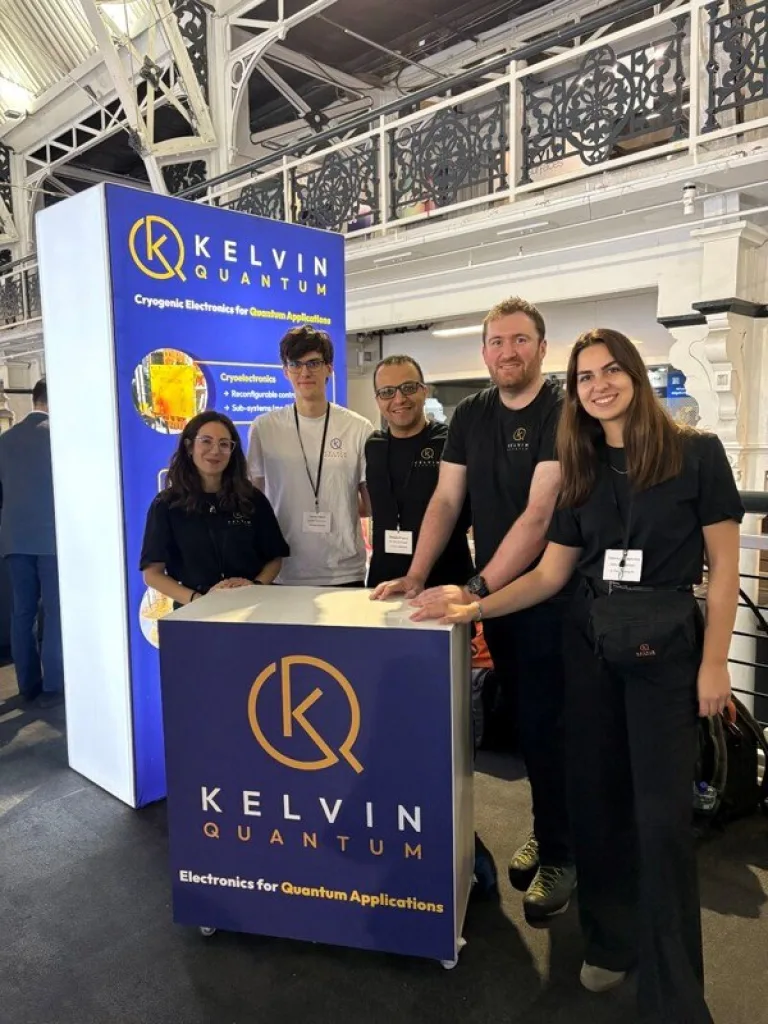
As Stavroula Kapoulea, COO at Kelvin Quantum, reflected:
The Kickstart programme really helped us turn a vague sales idea into something clear and actionable. We sharpened how we talk about our value and started building a real path towards our first customers. As an early-stage team, having practical tools we could use straight away made a big difference.
The programme also strengthened how the team engaged with investors, reinforcing the connection between commercial traction and investment readiness — something Robert pointed to directly:
“Investors want to see that you have a good understanding of how you're going to sell things to customers before they'll put money behind you.”
Mapping the Path to Scale
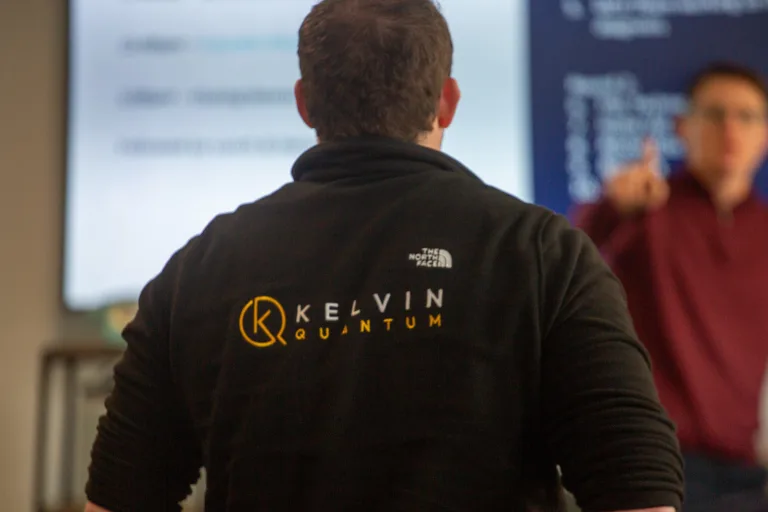
Having gone through the programme, the team is now in a very different position — not only in how they approach the market, but in how they think about what comes next.
Early signs of traction are already beginning to emerge. New connections made through online channels are translating into tangible opportunities, including initial proof-of-concept projects.
“We’ve now handed off a few quotes for our first proof of concept projects… These were kind of new relations that we built through online connections.”
More significantly, the focus has shifted towards preparing for the next stages of growth. Rather than concentrating only on immediate priorities, the team is now thinking more deliberately about the path ahead and what it will take to scale.
Reflecting on this, Robert said:
We’re now looking at raising money to actually scale the company itself. Kickstart’s helped us not just think about what we need now, when we’re starting to raise pre-seed money, but what we need in order to bridge the gap and get to a seed round and then a Series A.
What stands out is not just the progress Kelvin Quantum made during the programme, but the shift in how that progress is approached. Moving from an informal and reactive model towards a more structured commercial strategy has given the team greater clarity around growth, customer engagement and investment readiness.
For many early-stage deep-tech ventures, that transition is often what determines whether strong technical innovation can successfully scale into a commercially viable company. Kelvin Quantum’s experience offers a clear example of how developing commercial structure alongside technical capability can help unlock the next stage of growth.
Discover how we support early-stage innovation ventures
Recent Insights
Supercharge your inbox
Subscribe to our emails for the latest insights and updates