Blogs
Videos
Green Chemistry and the Road to Investment with Viridi
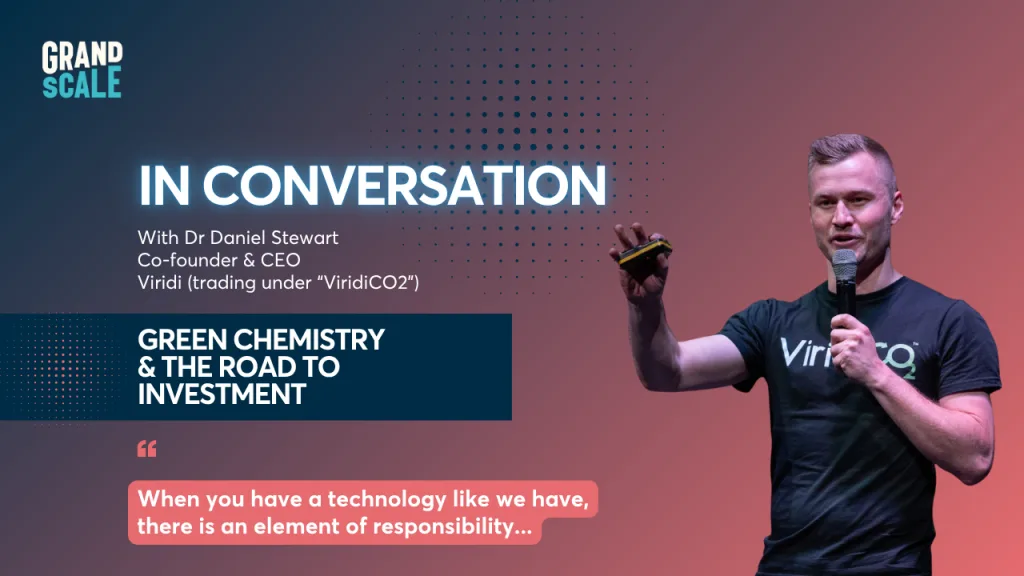
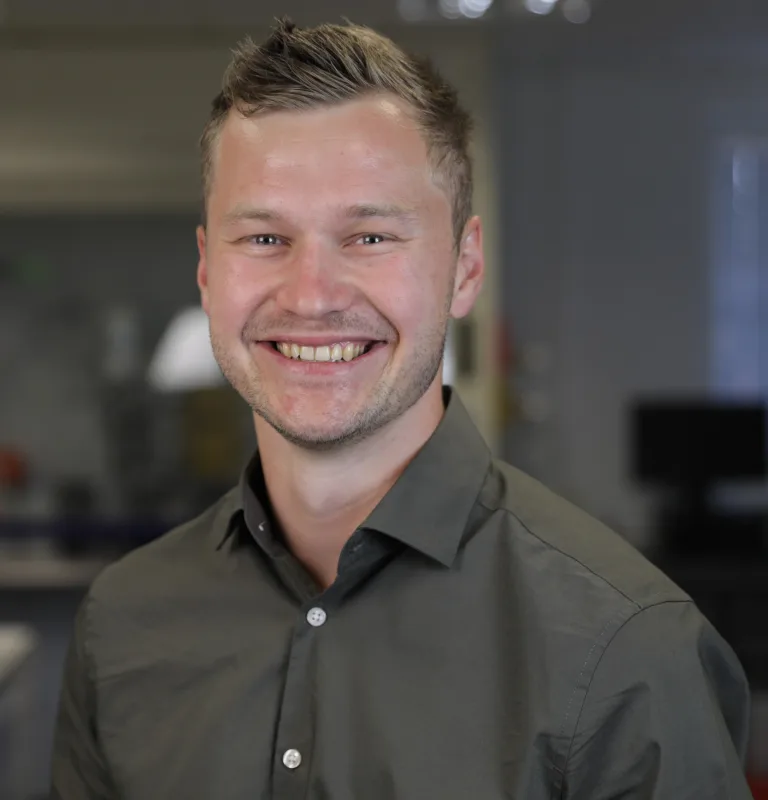
At Grand Scale, we love bringing our programme alumni back to share their journeys with current teams. As part of our net zero-focused Ignite cohort, we hosted a fireside chat with Dr. Daniel Stewart, co-founder and CEO of Viridi (trading under “ViridiCO2”) and Grand Scale Kickstart graduate.
Viridi is a University of Southampton spinout that turns waste CO₂ into valuable chemical building blocks—like surfactants and polymer feedstocks—using retrofit-friendly catalyst technology. It enables manufacturers to slash their use of petrochemicals, cut emissions, and reduce costs by as much as 30%.
Since spinning out in 2021, Dan and his team have raised £3 million in seed funding from EQT Ventures, advanced their technology toward commercial scale, and earned Dan a place on the Forbes 30 Under 30 list. Today, they’re scaling rapidly and have closed another investment round—backed by EQT and Possible Ventures—to accelerate commercial roll-out and deliver on multiple customer contracts.
In this in-conversation piece, we sit down with Dan to explore how he got started, navigated the spinout journey, built the team, scaled traction, funded the business, communicated complex research, and what’s next for Viridi—straight from the founder himself.
Knowing Your Why
Viridi began life in Dan’s PhD research, where he developed a method of producing certain chemical ingredients that go into consumer goods directly from carbon dioxide. What that technology can achieve has shaped the company’s purpose from day one.
“Everyone sort of forgets that the chemical industry is the backbone of everything. Everything has some form of chemicals in it, whether it's your phone, your clothes, the foods you eat. And there's a huge sustainability impact on the world when we use these materials. So the chemical manufacturing industry needs solutions to reduce its CO₂ footprint, use less energy, produce less emissions, be greener all around. And ultimately, Viridi is providing a solution to the industry for that.”
On the decision to commercialise, Dan was clear that building a company was the fastest route to deliver impact.
“The reason we spun Viridi out is because when you have a technology like we have, there is an element of responsibility. We were academics first. We developed a solution for the betterment of the planet, ultimately. And when we have something that works as well as it does, the fastest way of delivering it to the planet is not through academia, unfortunately. It is through making it profitable and delivering it as a business. And that's the reason why we chose to do it.”
Key Steps for Spinning Out
For Dan, the spin-out journey began with two essentials: securing intellectual property (IP) and building a committed team. Protecting the IP gave Viridi the confidence it could commercialise the technology, while assembling the right people created the foundation to deliver it.
“One of the biggest turning points was getting the patents filed for our technology. That was supported by our university. And once we had done so, we were confident enough that we could then exploit it ultimately.”
But there was also a personal turning point which was the willingness to leave the security of academia.
"The hardest thing wasn’t starting something new. The hardest thing was leaving something I was very cushy and comfortable in."
Funding the Journey
1. First Steps
Viridi’s first funding came through a non-dilutive government grant, which Dan says was crucial in getting them off the ground. From there, he outlined what founders should keep in mind when pursuing both non-dilutive and dilutive funding.
2. Non-Dilutive Funding Considerations
When it comes to grants, Dan says it is essential to understand the criteria each funder is looking for. These opportunities often place just as much weight on the commercial potential as they do on the technology itself, and that is something many academic founders overlook.
If the UK government is giving you money, it's because it wants you to be a successful business that makes money. So, ultimately, the technology is not the most important bit. And if you're coming from an academic background, it's really easy to get lost in that. But if you can't commercialise it and you can't prove your business model, you're going to go nowhere, unfortunately.
3. Dilutive Funding Considerations
In terms of early, dilutive investment like angel funding, Dan stresses that the pitch is less about proving the technology itself and more about showing the capability of the team behind it.
Angel investment and early stage VCs are backing you, not the technology. Your ability to build a team to deliver. The technology is kind of a given if you're coming from an academic background because you're deemed to be a smart cookie. So, you should be able to work it out. But authenticity, being genuine, passionate — those are sort of the key things to keep in mind when you're pitching for money.
That said, Dan is clear that deep-tech startups still need to show a credible path to profitability. For CO₂ utilisation and chemicals in particular, lab-scale economics will almost never work. The real test is whether the numbers make sense at scale.
If you cannot show that your technology will be profitable at scale, Dan says, you are simply not investable. That means digging into your costs, applying known scaling efficiencies — for example, every order of magnitude increase in production should reduce costs by 50–70% as raw material prices fall — understanding your target market price, and proving you can match or beat it, especially since people aren’t willing to pay a premium for sustainable technology. If the numbers don’t work, you either change the technology or reconsider whether a startup is the right route.
4. Key Milestones on the Path to Investment
For Viridi, the funding path follows a clear sequence: achieve a technical breakthrough, use that to secure commercial traction, and then leverage that traction to unlock the next round of investment. But what is traction for Dan?
For us, it is people paying to trial our technology. We have not done a single trial for free. And it's simply because we think we're worth the money to start with. But also, if people pay money, they're invested. If people just get it for free, it's not really a priority and that's not really traction… Letters of Intent aren't legally binding. Having an agreement that says you have to pay for this regardless of whether you take it or not, and it's worth a quarter of a million. That's what investors hang their hats on.
Delivering on these milestones, Dan says, comes down to having the right team in place at the right time. They do this by working backwards from future goals, identifying the gaps that could slow them down, and pinpointing the hires that will move the needle most at that stage. For example, knowing they’ll need a strong finance lead ahead of their next Series A raise, they’re already preparing to fill that role well in advance.
Communicating a Net Zero Offering
Dan is very clear that you won’t get your pitch right first time — and that’s fine.
You're going to get the pitch wrong. You're not going to sell it right first time and that's okay because you use these experiences to learn and refine your pitch and then you nail it. Just make sure you practise with stakeholders that are less important.
He says one of the biggest lessons was that you can’t design a value proposition in isolation. Early on, he didn’t fully understand the supply chain his technology would have to integrate with. It was only by speaking to stakeholders across the chain — at trade shows, government events, and industry meetings — that he uncovered what customers really valued.
“It's only when you have the full holistic view of what's going on and what is important to everybody that you can really design your value proposition to deliver onto it.”
One example: Viridi initially thought the biggest selling point was the energy saving from running processes at lower temperatures. In reality, customers cared more about reducing reactor time to produce extra batches — creating both more product and more CO₂ utilisation.
“You're only as good as your assumptions. If you don't challenge them, you won't get the full picture.”
What’s Next and Lessons for Founder
Looking ahead, Viridi is focused on delivering its recently signed commercial offtake agreements — a major step towards seeing its technology in everyday products. While the details remain under wraps, Dan hints at the potential impact:
“I really hope soon we're going to be building towards a first commercial product you can buy in the supermarket that contains our technology… We could be washing our hair with CO₂ or washing the dishes with CO₂.”
Reflecting on the journey so far, Dan says one of the most valuable lessons for deep-tech founders is knowing your limits.
You cannot build a deep tech, scaling, sustainable business by yourself, no matter how much your ego tells you you think you can. Find out what you’re not good at and get someone in who’s good at it. Don’t feel bad about being bad at something — we can’t be good at everything. The sooner you do that, the better.
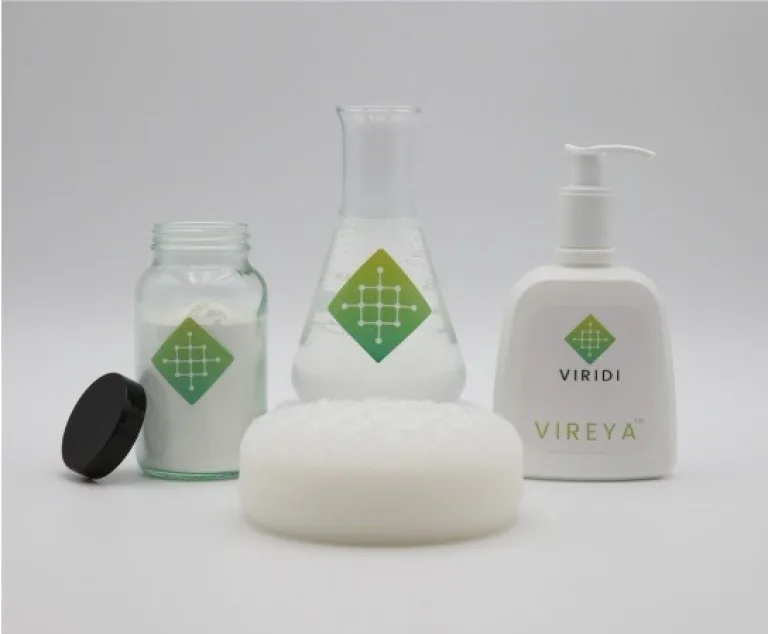
Update (Oct 2025): Since this conversation, Viridi has launched Vireya, the world’s first CO₂-based anionic surfactant, built using captured CO₂ to power next-generation home cleaning products.
Watch the Full Conversation
We’ve covered some of the key moments from Dan's journey above — but there’s much more in the full fireside chat.
Recent Insights
Supercharge your inbox
Subscribe to our emails for the latest insights and updates