Case Studies
From Lab to Market: How Albotherm Is Scaling Passive Cooling
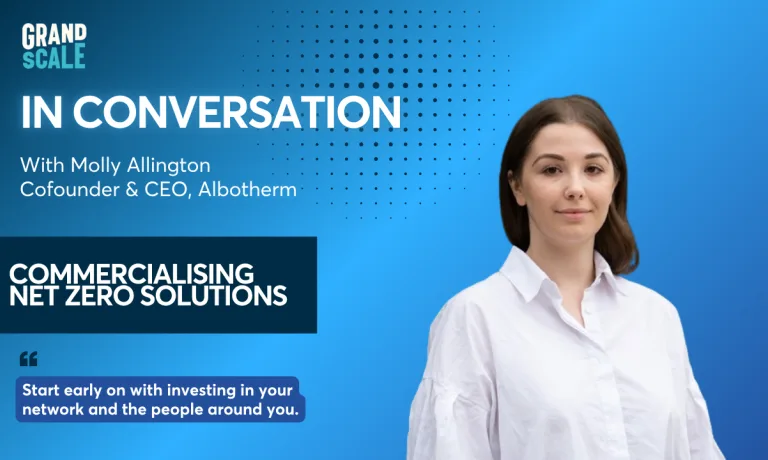
Molly Allington is the co-founder and CEO of Albotherm, an innovative Bristol-based spinout developing temperature-responsive coatings that provide cooling without power. Designed for use on glass in buildings and greenhouses, the coatings shift from transparent to white in hot weather to reflect excess heat, before returning to clear as temperatures fall.
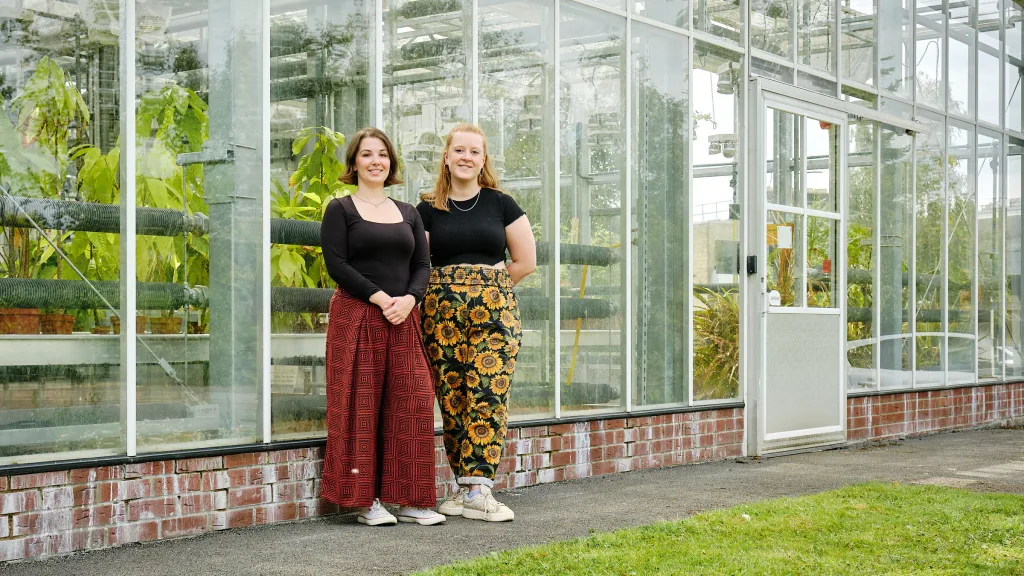
The concept began while Molly and her co-founder, Dr Sian Fussell, were working in the same University of Bristol research group.
Inspired by a suggestion from their supervisor, they explored whether temperature-responsive materials could be used to keep a conservatory cool during summer.
Over time, the idea evolved into a patented additive that can be incorporated into existing paints and coatings, enabling a simple spray-on solution to help regulate indoor climates without mechanical cooling.
Building Commercial Skills
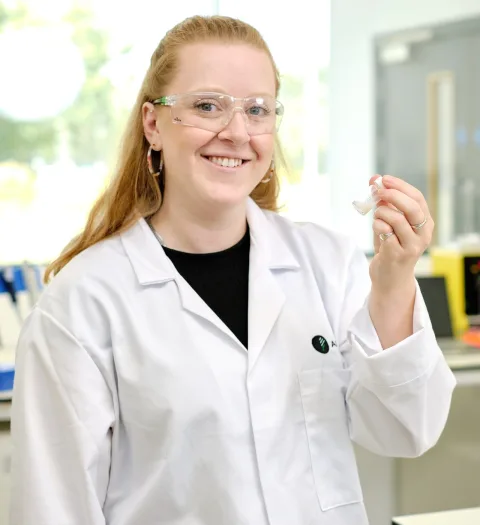
Having spun out from the University of Bristol, Molly and Sian brought deep technical expertise but no formal business training. Coming from academic backgrounds, their focus had been on research and product development rather than the practicalities of commercialisation.
“With only two founders, we faced two main challenges: upskilling ourselves to cover every role and securing funding.”
Developing commercial skills — from understanding markets to communicating value — was essential. Grand Scale Kickstart provided structured, practical training designed to help technically led founders navigate this transition.
The Grand Scale programme is a perfect introduction course for entrepreneurs with a technical background to get to grips with marketing. Ro and Leanne are fantastic teachers and provide a really clear structure for understanding.
Access to Markets
Before Kickstart, Albotherm’s sales and marketing activity was largely ad hoc. The team lacked a structured approach to identifying and qualifying customers, messaging wasn’t clearly tailored to specific segments, and activity was spread across multiple directions without consistent results. This made it difficult to reach the right customers and build credible market traction.
Through the programme, Albotherm developed a clear, repeatable process for planning and running marketing campaigns. One of the most valuable shifts was learning how to map the commercial journey into defined, measurable stages — strengthening commercial capability while improving access to target markets.
The focus on quantifying and mapping out your process was really helpful… without formal business training, you’re not always thinking about things in a structured way and it can feel overwhelming. Breaking it down into small stages and tasks makes it much more manageable.
Kickstart also introduced practical tools for lead classification, helping the team prioritise the right opportunities rather than chasing every possible lead — a critical step for a small team balancing limited resources.
“As a small startup you don't want to turn down any business, but we are often pulled in a lot of different directions, so having a framework to classify and therefore prioritise leads is very powerful.”
This sharper market focus enabled Albotherm to engage more effectively with customers, run their first commercial trials, and generate meaningful market validation. Establishing product–market fit in this beachhead market is now the foundation for longer-term growth.
Access to Finance
Alongside improving access to markets, Albotherm had to develop the commercial understanding required to raise funding. For Molly and her co-founder, fundraising was closely tied to learning how investors evaluate businesses.
You’re having to value the business and understand how that process works.
Early grant funding proved vital, allowing the team to continue technical development while building evidence of market demand. As Albotherm’s commercial skills and customer engagement matured, the company was better positioned to articulate its value proposition and demonstrate traction.
Since completing Kickstart, Albotherm has closed two investment rounds and secured over £1.5 million in Innovate UK funding. These funding milestones were directly linked to the company’s improved market focus and commercial clarity, highlighting how access to finance depended on access to markets and the skills to connect the two.
Advancing Toward Product Launch
With stronger commercial capability, clearer market traction, and improved access to finance, Albotherm has been able to accelerate progress toward product launch. Investment and grant funding have enabled the company to move into a new office with dedicated lab space, supporting faster R&D, testing, and preparation for scale.
Commercial trials with early customers have provided critical validation, demonstrating both technical performance and real-world demand. In greenhouse trials, Albotherm’s coating has been shown to increase crop yields by up to 34%.
These combined advances — in commercial skills, market access, and finance — have positioned Albotherm to bring its first product to market with confidence.
Breaking into New Markets
With product–market fit established in its beachhead greenhouse market, Albotherm now sees a clear pathway to future global markets. Validated results, growing market share, and industry credibility provide the foundation to expand into new sectors.
The team sees particular potential in applying its technology within the built environment, where passive cooling could deliver significant impact. With cooling from air conditioning accounting for around 10% of global electricity use — a figure expected to rise as temperatures increase — Albotherm’s coatings could offer a scalable, low-energy alternative for regulating indoor temperatures in offices, schools, and homes.
By first proving commercial success in a focused market, Albotherm is positioning itself to scale internationally, translating early traction into broader global impact.
Discover how we support early-stage innovation spinouts
Recent Insights
Supercharge your inbox
Subscribe to our emails for the latest insights and updates